


How to Sound Like Thornhill: Raw, Atmospheric, and Aggressive (Guitar Tone Breakdown)

Updated: Aug 20

Thornhill occupy a strange middle ground in modern metalcore and post-metal — the guitars can sound almost chaotic and abrasive one moment, then pull back into something dark and atmospheric the next, built to sit under synths and ambient textures rather than fight them for space. Getting that tone right means treating it less like one sound and more like three different jobs: a rhythm tone built for low-tuned heaviness, a darker "lo-fi" tone for atmosphere, and a lead tone that stays melodic without losing the distorted identity underneath it.
The rhythm tone: aggressive, not polished
The instinct with heavy, low-tuned riffing is to reach for a single high-gain stage and call it done. Thornhill's rhythm tone works differently — it leans on stacking two distortion stages rather than one. That's a decision most people skip because it sounds like it should just add more gain, but the real effect is textural: two distortion stages interacting creates a metallic, slightly chaotic edge that a single pedal or amp channel can't produce on its own, while a tight noise gate keeps it from collapsing into noise on low-tuned chords.
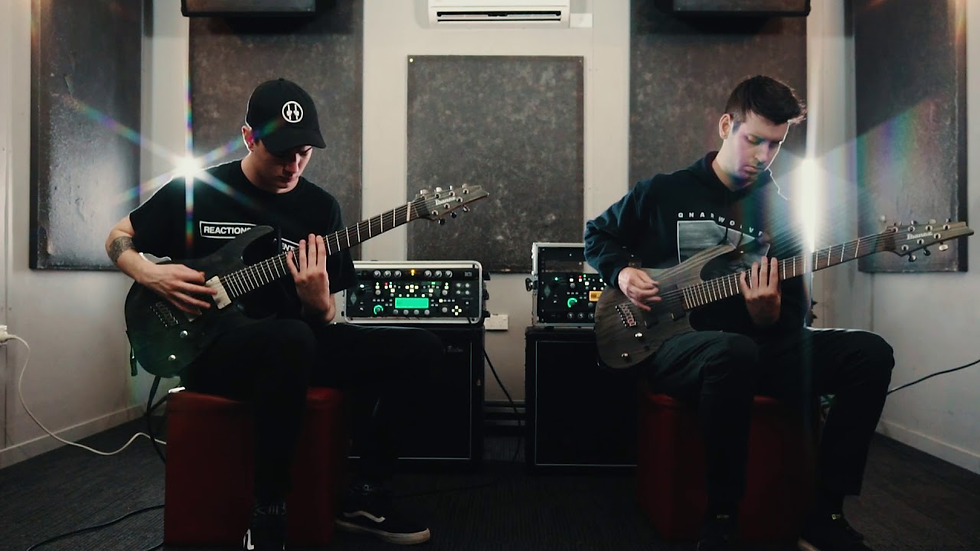
The mic choice matters here too, and it's the opposite of what you'd expect from a "big" modern tone. Instead of blending multiple mics for width, this tone stays close and direct — a single dynamic mic placed tight to the speaker. That closeness is what gives the attack its aggressive, in-your-face character. Adding a second mic here would actually soften the tone's edge, not enhance it.
The lo-fi tone: darker on purpose
This is the tone built for Thornhill's interludes and buildups — the moments where the guitar sits underneath synths and ambient layers instead of leading. The instinct is to think "atmospheric" means scooping gain and adding reverb, but the more effective move is subtractive: pull back the top end and let the midrange carry more of the weight. A darker, more restrained EQ curve leaves room for everything layered on top of it, rather than competing for the same frequency space.
The mic decision changes here as well — moving to a ribbon mic instead of a dynamic. Ribbon mics naturally roll off harsh high end and add warmth, which does a lot of the "lo-fi, subdued" character work before any EQ move even happens. It's a small swap, but it's doing more of the job than people expect.

The lead tone: melodic without losing the edge
For leads, the goal shifts to expressiveness while keeping a thread of connection to the distorted, raw character of the rest of the pack. Chorus adds width and movement without pushing the tone into "clean" territory, while reverb and delay work together to create depth — but the balance is delicate. Too much reverb and the tone loses the aggressive edge that ties it back to the rhythm tone; too little and it doesn't feel atmospheric enough to stand out as a lead. Getting that balance right is mostly trial and error against a real mix, not something you can dial in by ear alone in isolation.
All three tones are built around this kind of layered decision-making — mic choice, gain staging, and effects balance all doing specific, deliberate jobs rather than just "sounding heavy." Archetype Gojira gives you the modeling flexibility to actually make those calls, but getting all three tones to feel like a cohesive pack takes a lot of back-and-forth.
We already did that work. If you'd rather skip the trial and error, we built this exact rhythm, lo-fi, and lead pack as a ready-to-load preset set — download it here and drop it straight into your session.
