


How to Sound Like ERRA (Guitar Tone Breakdown)

Updated: Aug 20
ERRA sit at the crossroads of djent, metalcore, and progressive metal, where the guitars have to do two contradictory things at once: hit hard enough to carry riffs that lock in with polyrhythmic drums, and stay clean enough that every note in a tapped lead line or atmospheric solo comes through untouched. That balance crushing low end without losing articulation — is the hardest part of the tone to actually recreate, and it's where most attempts fall apart.

The rhythm tone: tight, not just heavy
The instinct most people have is to chase a heavy djent-style rhythm tone by cranking gain. That's the wrong move. A tight, articulate metalcore rhythm tone like this comes from doing the opposite — pulling gain back further than feels natural and letting a noise gate and careful EQ do the work of definition instead. Push the gain too far and the low mids turn to mud; the "weight" in a tone like this comes from where the mids sit, not from how saturated the signal is.
The other piece people usually skip: shaping the tone after the amp, not just on it. A graphic EQ pass post-amp lets you carve out specific problem frequencies without recoloring the amp's natural voicing the way turning amp knobs does. It's a slower, more surgical way to work, but it's the difference between a tone that sounds "high gain" and one that sounds produced.
There's also a mic decision that trips a lot of people up. The obvious move is a single dynamic mic close to the cap — and it gets you most of the way there. But a tone this polished and wide usually isn't a single mic. Blending in a second mic, positioned further back, adds air and openness that a close mic physically can't capture on its own. It's a small decision, but it's often the one separating a tone that sounds like a bedroom recreation from one that sounds like the record.
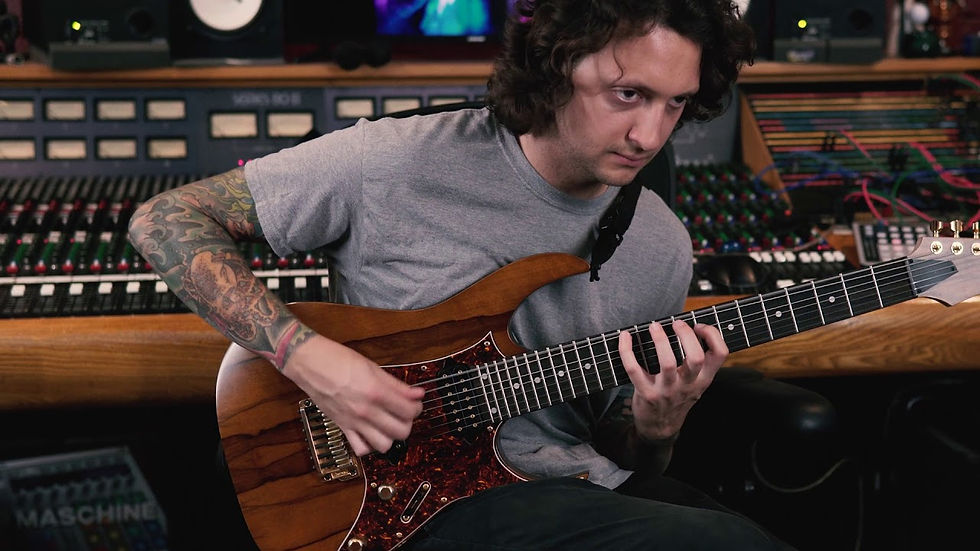
The lead tones: two different jobs
ERRA's leads split into two distinct roles and treating them the same is a common mistake.
For tapping-style passages, the priority is note separation — every note needs to stay legible even at speed. That means keeping saturation subtle and using delay sparingly: short and responsive rather than lush. A big, washy delay sounds nice in isolation but turns fast tapping into mush. The goal here is space without smear.
For full-on solos, the priorities flip. This is where high-end clarity gets pushed further and reverb gets room to breathe — the tone needs to feel bigger and more atmospheric to carry a solo over a dense mix. The trick is finding a reverb size that adds depth without eating the attack of each note; too much and the solo loses its edge.

All of this is buildable with amp/cab modeling that gives you real control over mic blending and gain staging, rather than just approximating the tone — Archetype Gojira is what we used here. The catch is that dialing it in properly (gain staging, the EQ pass, mic blend, delay/reverb balance across three different tone roles) takes a lot of back-and-forth if you're building it from scratch.
We put in that back-and-forth already. If you'd rather skip the trial and error, we built this exact rhythm tone plus both lead variations as a ready-to-load preset pack — download it here and drop it straight into your session.

