How to Get Spiritbox's Guitar Tone: The Eternal Blue Sound

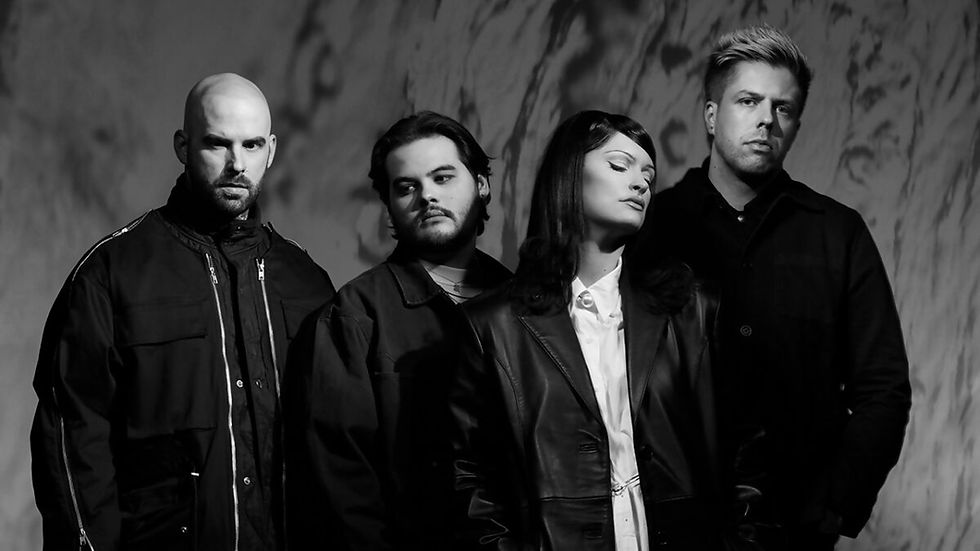
Spiritbox's tone on Eternal Blue — the sound that powers tracks like "Holy Roller" — sits at the intersection of djent, metalcore, and progressive metal, but what makes it distinct isn't just heaviness. It's clarity under gain. The riffs stay articulate and cutting even at high distortion, which is a much harder balance to hit than it sounds, and it's built from two very different tones working together rather than one tone doing everything.
The main rhythm tone: bright, not thick
Most high-gain rhythm tones lean into thickness — boosting mids, piling on low end, chasing "heavy" as a synonym for "big." Spiritbox's rhythm tone goes the other way. The priority is high-frequency presence and upper-mid articulation, with the midrange intentionally pulled back rather than boosted. That's counterintuitive if you're used to scooped-mid metal tones being weak — here, the pullback isn't about weakness, it's about preventing the guitar from masking other elements in a dense mix, which is what gives the tone its sense of space and clarity even under heavy distortion.
The mic blend reinforces that decision.

Rather than going close and dark with a single dynamic mic, this tone blends in a condenser for extra top-end detail and air. It's a brighter, more open pairing than what you'd reach for on a darker, weight-focused rhythm tone — and it's a big part of why this tone cuts through instead of sitting underneath everything else.
The low octave layer: let the mics do the darkening
This second tone exists for a different job — layering under low tunings for extra weight and contrast. The interesting decision here is restraint: instead of reaching for EQ moves or an extra pedal to darken the tone, that darkening gets handled entirely upstream, at the mic stage. Swapping in a different dynamic mic paired with a ribbon mic does the tonal shaping before the signal even hits the EQ — both naturally roll off high end and add warmth on their own. Leaving the EQ untouched after that isn't a shortcut, it's the point: once the mic pairing is already doing the work, piling on more processing would only fight against a tone that's already correct, muddying something that's already dialed in.

Why two tones instead of one
The real production trick isn't either tone individually — it's combining them. Quad tracking with two genuinely different tonal characters (bright and articulate on one side, dark and weighty on the other) across stereo channels creates far more width and complexity than just doubling the same tone twice. Most people double-track for width and stop there; layering two distinct tones is what gives a mix real depth instead of just volume.
Recreating both of these tones — and getting the mic pairings and gain staging right for each — takes a lot of trial and error to dial in in Archetype Gojira. We already did that work across both tones.
If you'd rather skip the trial and error, we built this exact Main Rhythm and Low Octave pack as a ready-to-load preset set — download it here and drop it straight into your session.