


The Sound Behind ERRA's Self-Titled Album (And Why Fans Call It Their Peak)

Updated: Aug 20
Self-titling an album five records into a career is a strange choice. Some bands do it as a soft reboot, others almost out of habit. When ERRA did it in 2021, it read as something more deliberate: a statement that this record was the truest, most complete version of who they were as a band. Looking back, most fans and critics agree they backed that decision up — this is the album a huge chunk of the fanbase still points to as ERRA's definitive sound, the one that gets recommended first to anyone new to the band.

Why this record hits different
ERRA had always lived in that space between technical, djent-adjacent progressive metalcore and something more melodic and atmospheric, but on the self-titled record that balance finally felt fully resolved instead of like two halves fighting for control. Tracks like "Snowblood" open the album with brutally efficient, mental-health-themed riffing, while "Scorpion Hymn" leans hard into the off-kilter, Meshuggah-influenced rhythmic complexity that put the band on the progressive metal map in the first place. Then songs like "Shadow Autonomous" and "Vanish Canvas" pull in the opposite direction entirely — soaring dual-vocal melodies and lush, almost pop-adjacent hooks that never feel like a compromise on heaviness.

That range is really the whole story of why this album resonates the way it does. It's not the heaviest ERRA record, and it's not the most melodic one either — it's the one where both sides of the band's identity are given equal weight and made to coexist in the same songs, sometimes in the same thirty seconds. Critics at the time picked up on this immediately, with the record landing on Loudwire's best rock/metal albums list for 2021 and getting singled out repeatedly as a career-best distillation of everything the band does well.
A sound built on tension
What makes the self-titled album interesting from a guitar tone perspective specifically is how much of its identity comes from contrast rather than brute force. The riffing needs to stay tight and mechanically precise for the djent-leaning technical sections, but it also has to soften and open up for the melodic passages without sounding like a completely different guitar. That tension — precise and aggressive one moment, spacious and atmospheric the next — is a large part of what makes this record still feel like ERRA's high-water mark years later, and it's a genuinely difficult balance to recreate.
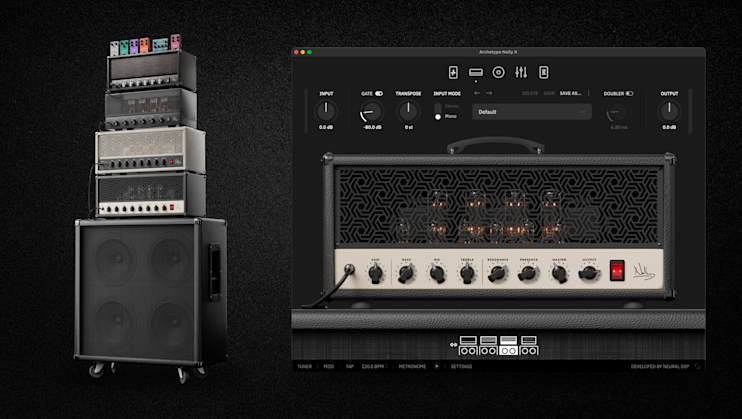
Translating that same balance into something purely digital isn't an easy task — precise and mechanical one moment, spacious and atmospheric the next, all within a single amp sim chain. It's the kind of contrast that usually gets flattened out in a modeled tone, but we wanted to give it a shot anyway. That's what the preset pack built around this era of the band, modeled in Archetype Nolly X, is chasing. If you'd rather skip the trial and error of dialing that contrast in yourself, you can download the self-titled-era ERRA pack here and load it straight into your session.

